The first letter. One last game at Grandma’s.
And everything in between.
Practical schedules, words to borrow and ideas for when plans change. Take what fits your family.
Plan the day
 03
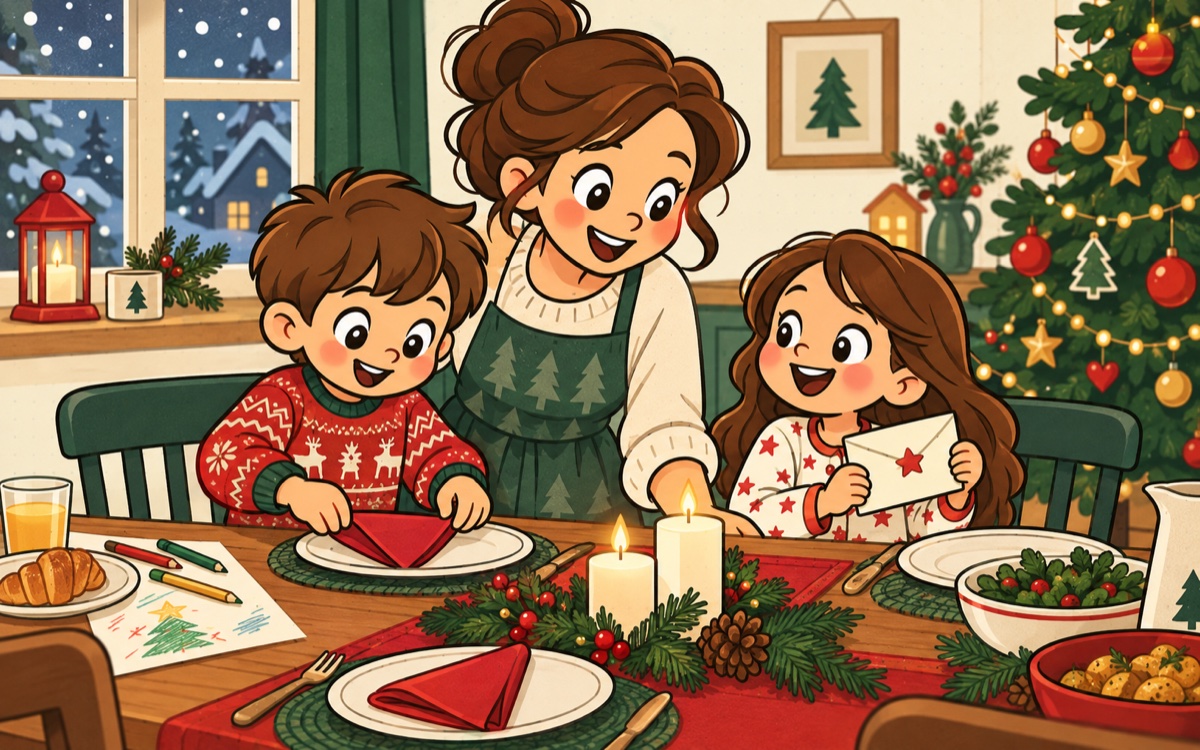
03Christmas Eve with children: four moments to look forward to.
Breakfast, a quiet break, setting the table and presents. Four things that may already be in your plans. Add a small activity or a letter to each, and leave room for the rest of the day.
Read the article ↗Plan the day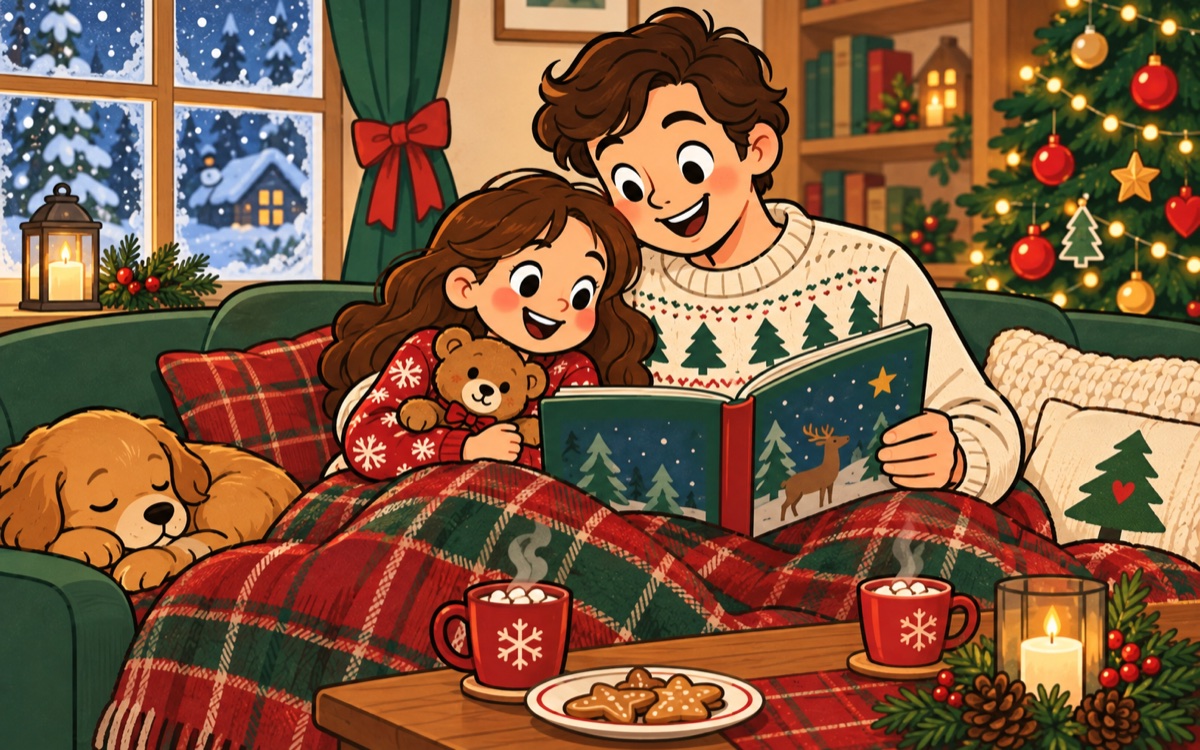 05
05A book and a blanket after lunch. Even on Christmas Eve.
There are crumbs on the table, it’s getting dark outside and dinner is still a while away. If your family usually has a quiet break after lunch, keep a place for it between the Christmas letters.
Read the article ↗Plan the day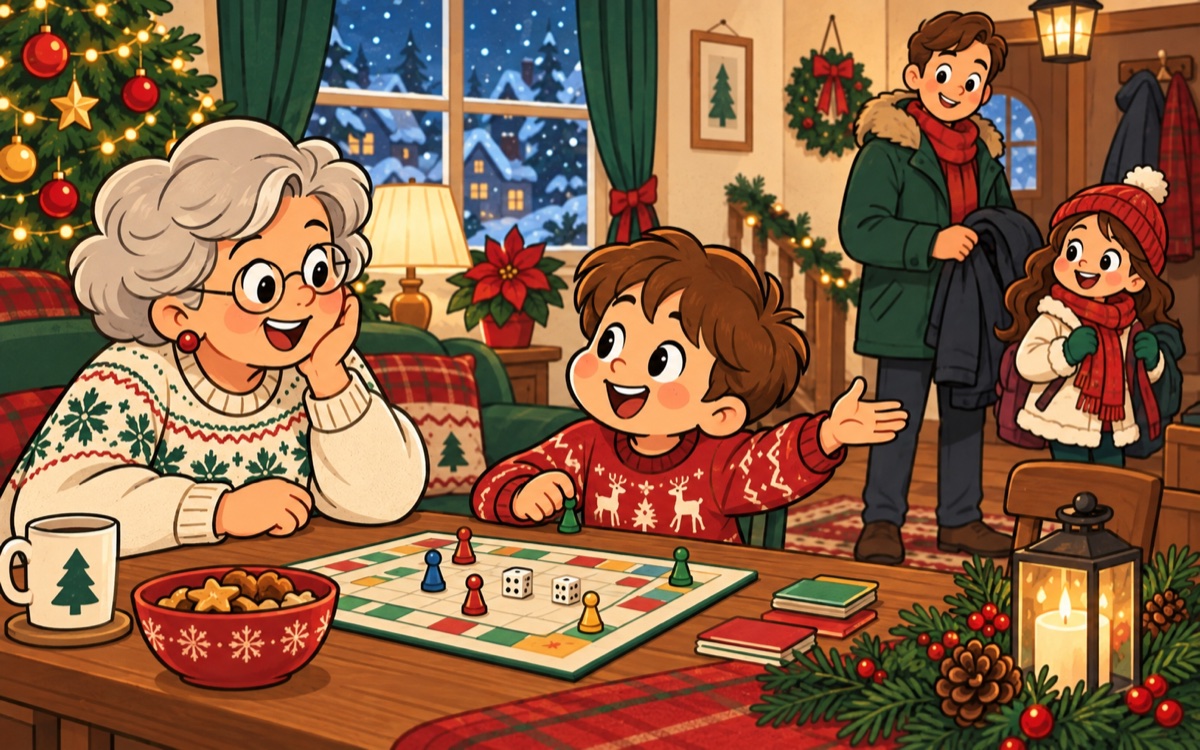 06
06“One more game!” Leaving Grandma’s on Christmas Eve.
The hats are waiting in the hallway, but there’s a game still spread across the table. Before the coats go on, let the children finish one thing and tell them what you’ll do when you get home.
Read the article ↗Plan the day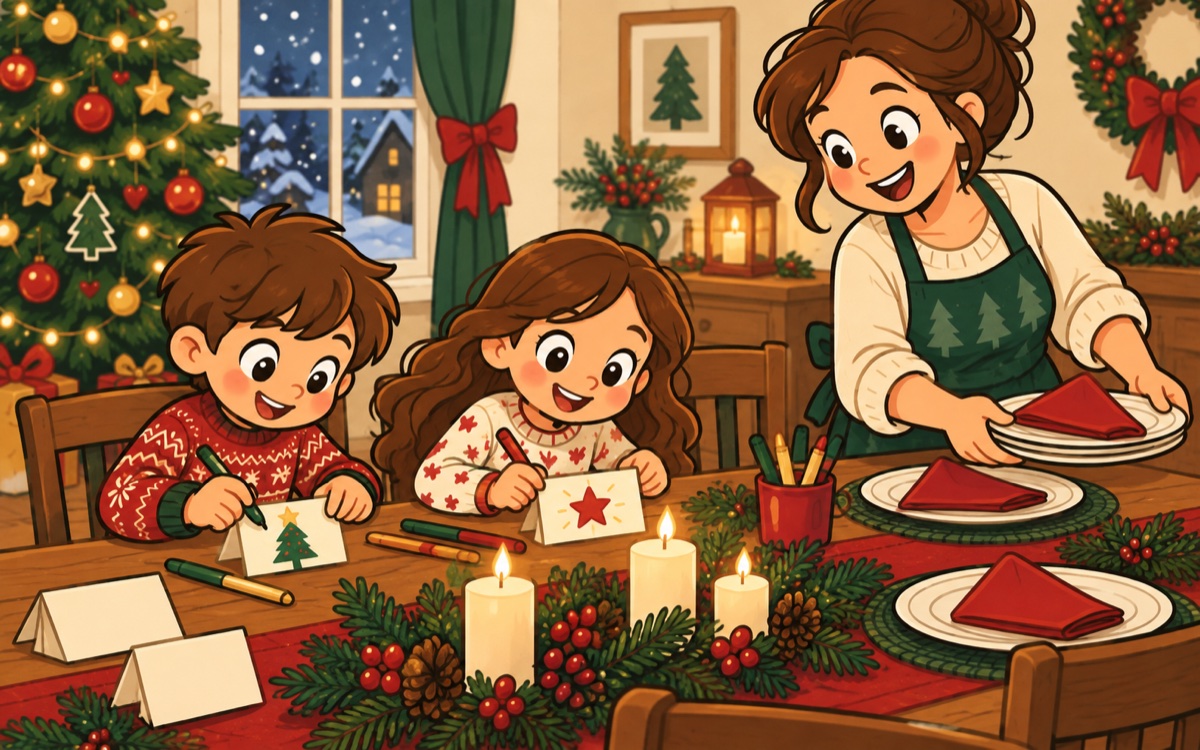 07
07Before Christmas dinner: place cards made by the children.
Dinner is still cooking and your child wants to help. Put some paper and pencils on the table. Each plate can have a name card, a star or a drawing for the person who’ll sit there.
Read the article ↗Plan the day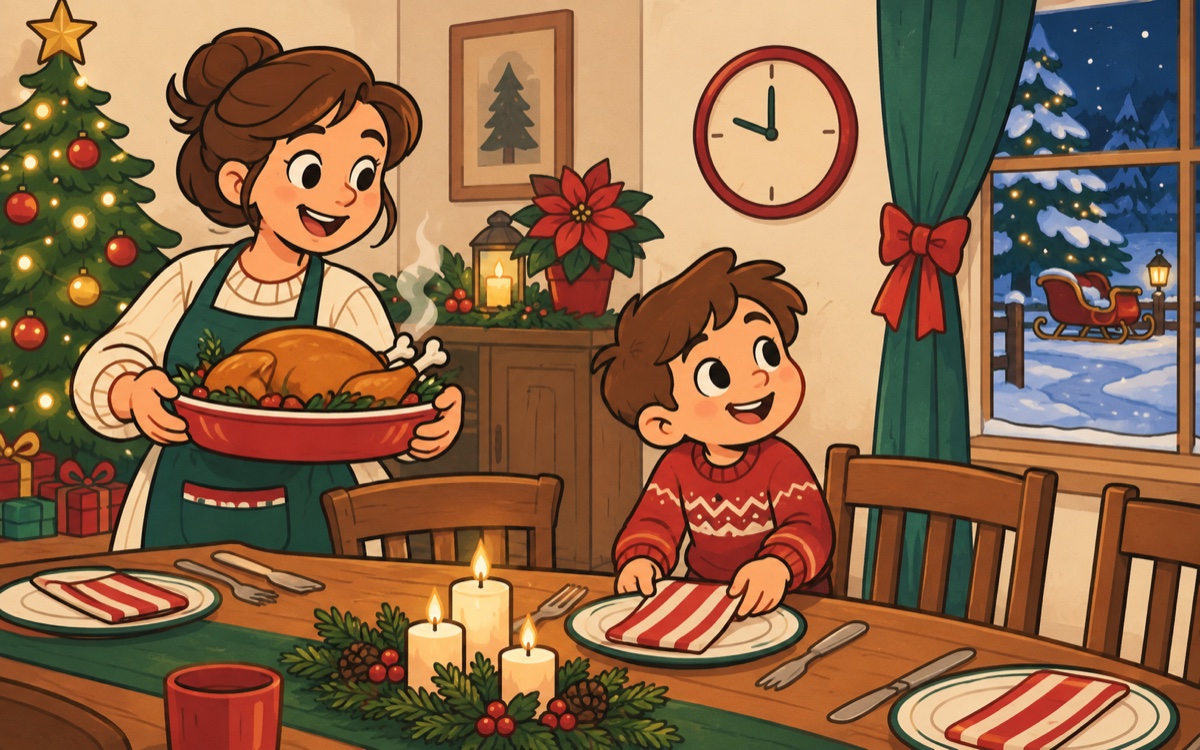 08
08Dinner’s running late. What happens to Santa’s arrival?
The children are waiting for the last letter, but there are still plates on the table and the presents aren’t ready. You can hold the arrival. Meanwhile, a short message can explain a little stop along the way.
Read the article ↗Plan the day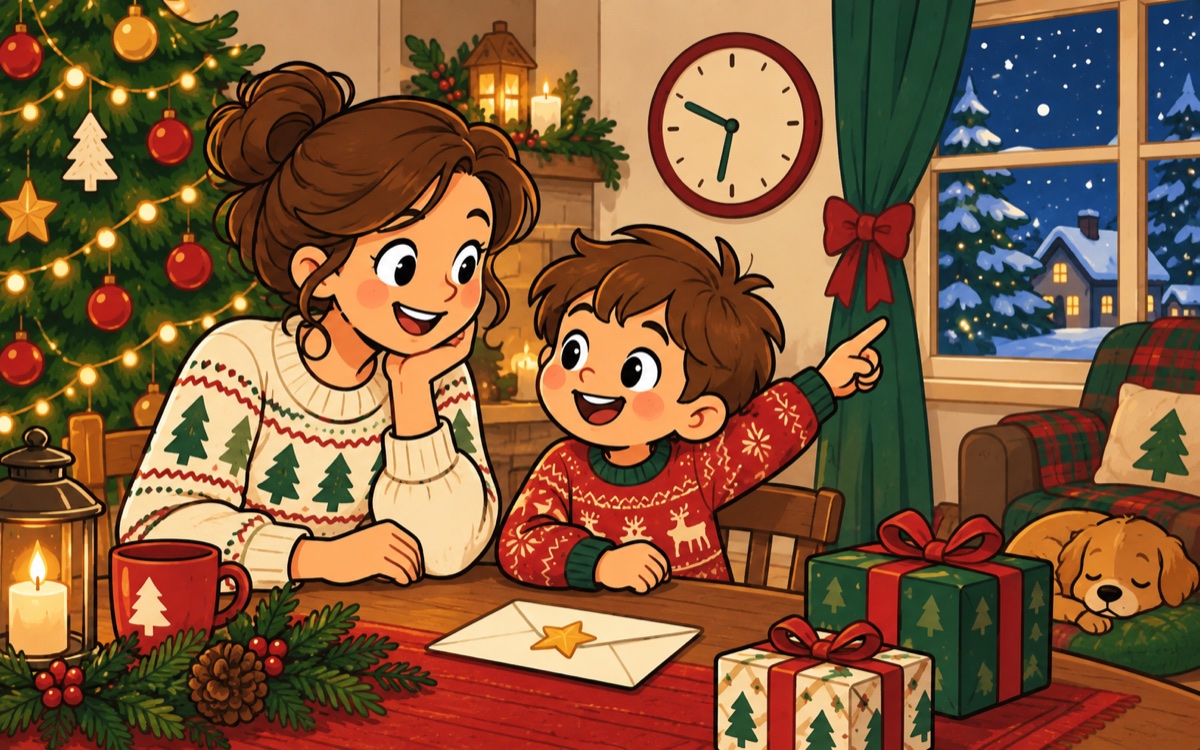 09
09Evening or morning presents? Write the right last letter.
In some homes, a bell rings after dinner. In others, children find their presents when they wake up. The last evening letter can invite them to the tree or wish them goodnight.
Read the article ↗Plan the day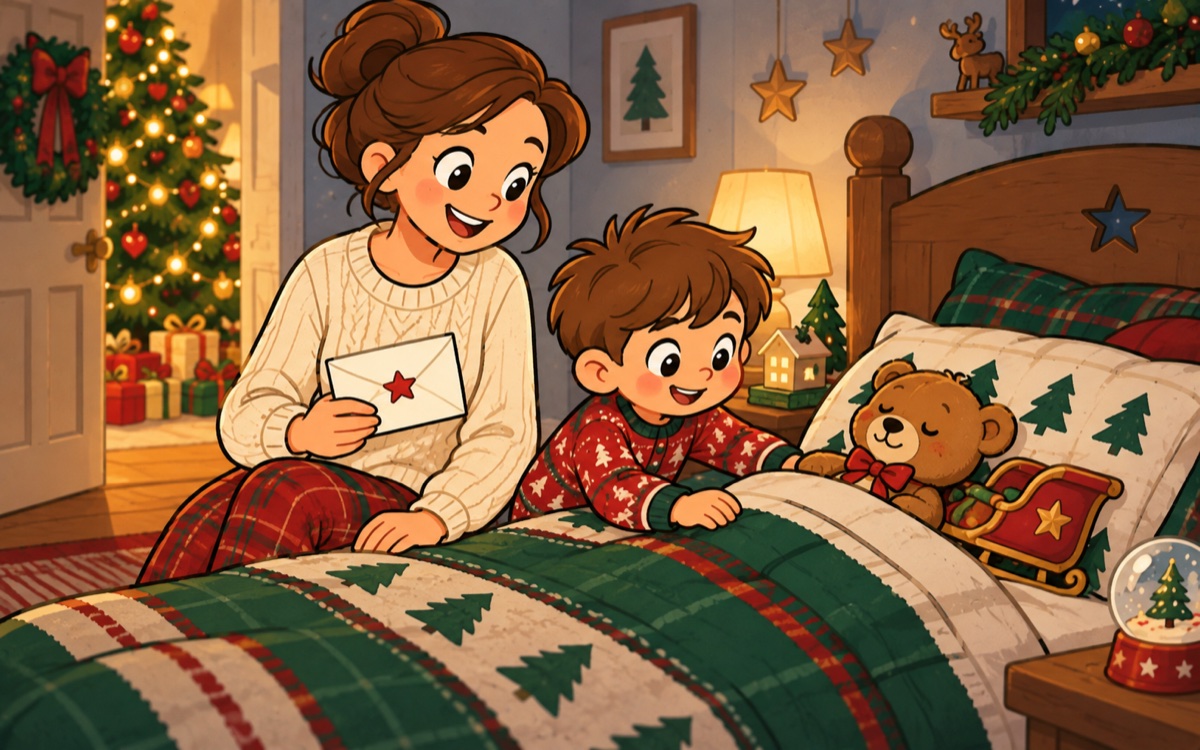 18
18Goodnight to the new toys too: a final Christmas letter.
The wrapping paper is tidied away, but the new toy car could keep driving for hours. Before bed, find it a garage together. A short letter can then say goodnight to the children and their new toys.
Read the article ↗Plan the day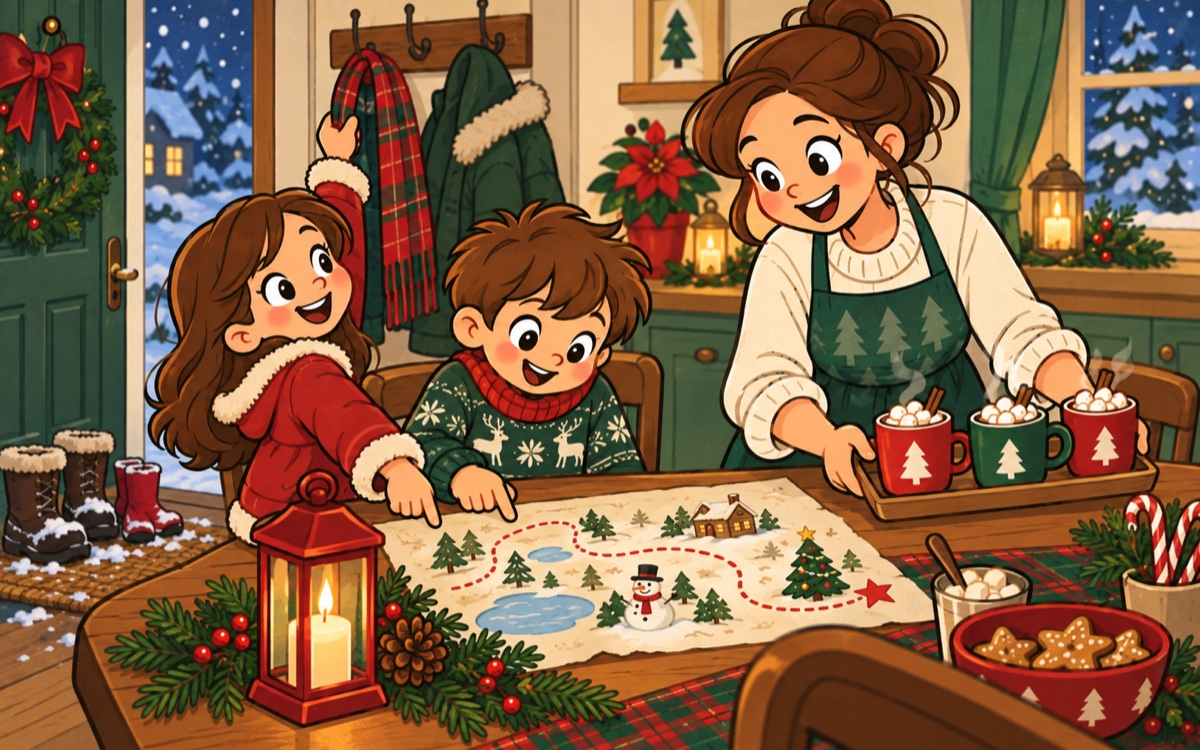 20
20When should you check the Christmas map? After your walk, perhaps.
You read the first letter, close the map and go outside. When you return, see how far the journey has come. Checking the map can be a small part of the things you already enjoy doing at Christmas.
Read the article ↗Maps and family traditions
 01
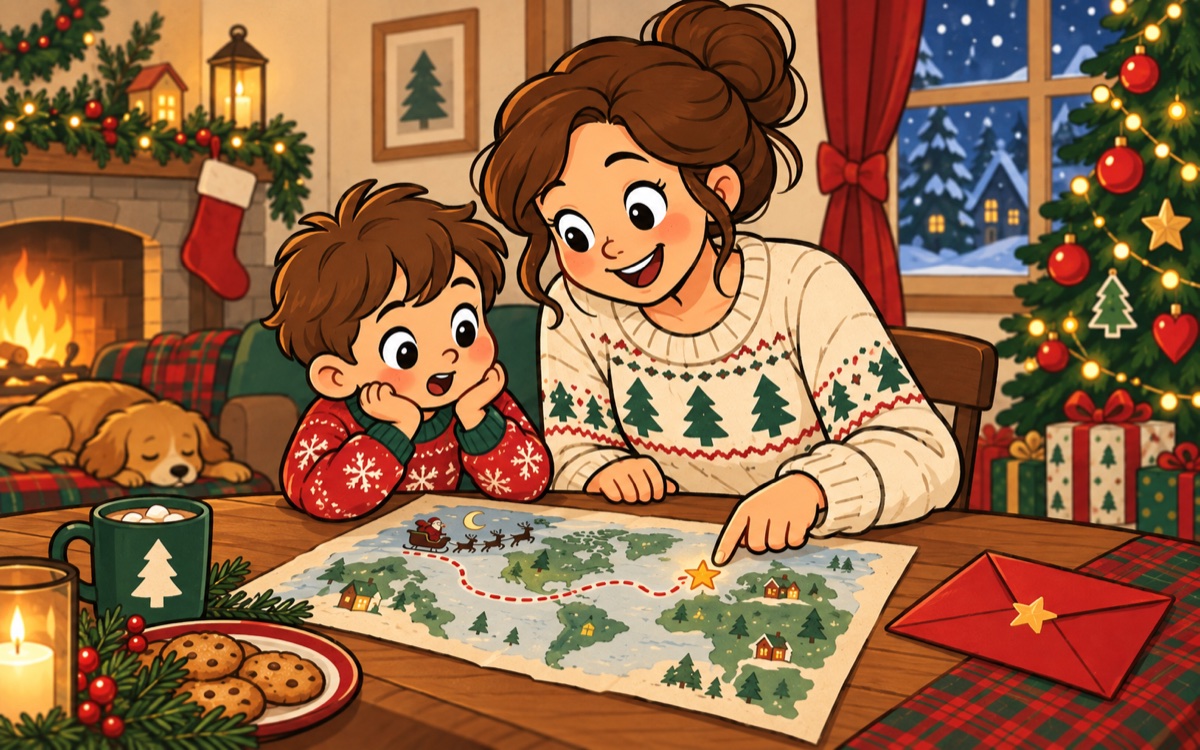
01“Where is he now?” A way to show children what comes next.
The first question arrives at breakfast. Then again while you’re putting on coats, and once more at Grandma’s. Four little pictures can help show what’s still to come.
Read the article ↗Maps and family traditions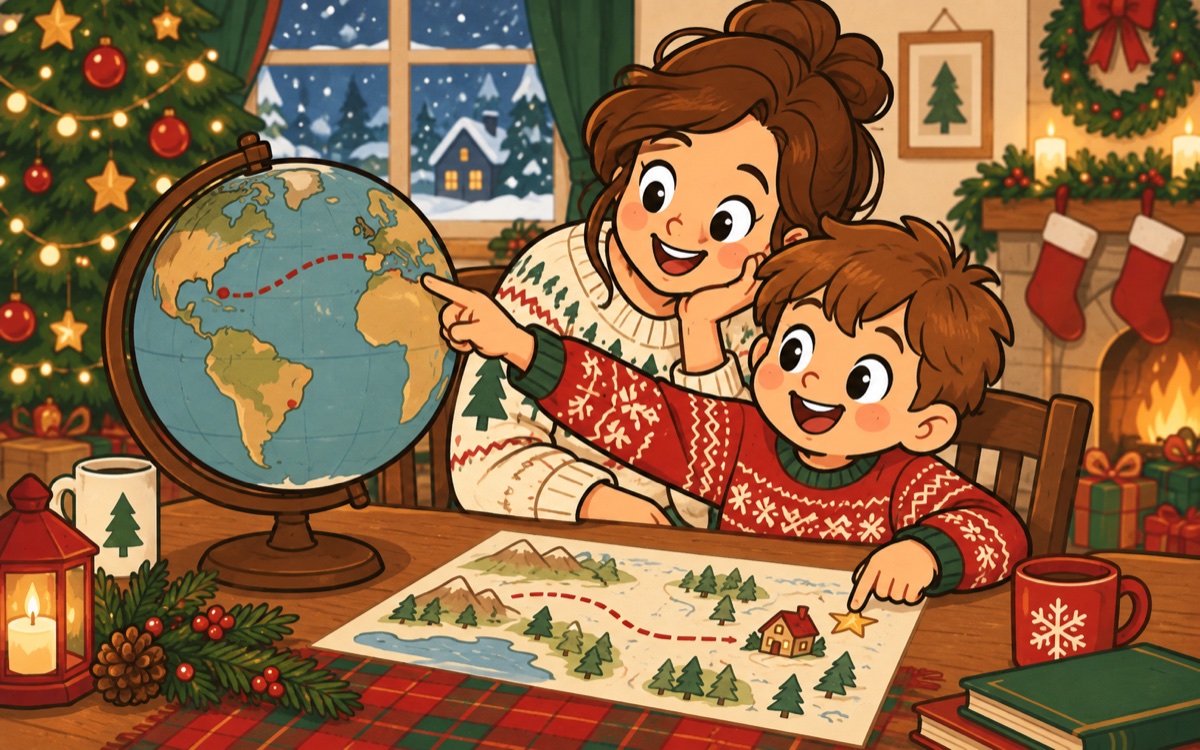 02
02A Santa tracker: around the world or on the way to you?
Your child finds Santa on the far side of the world and asks when he’ll reach your house. Before choosing a map, decide what you’d like to follow: his trip around the globe or his arrival at your tree.
Read the article ↗Maps and family traditions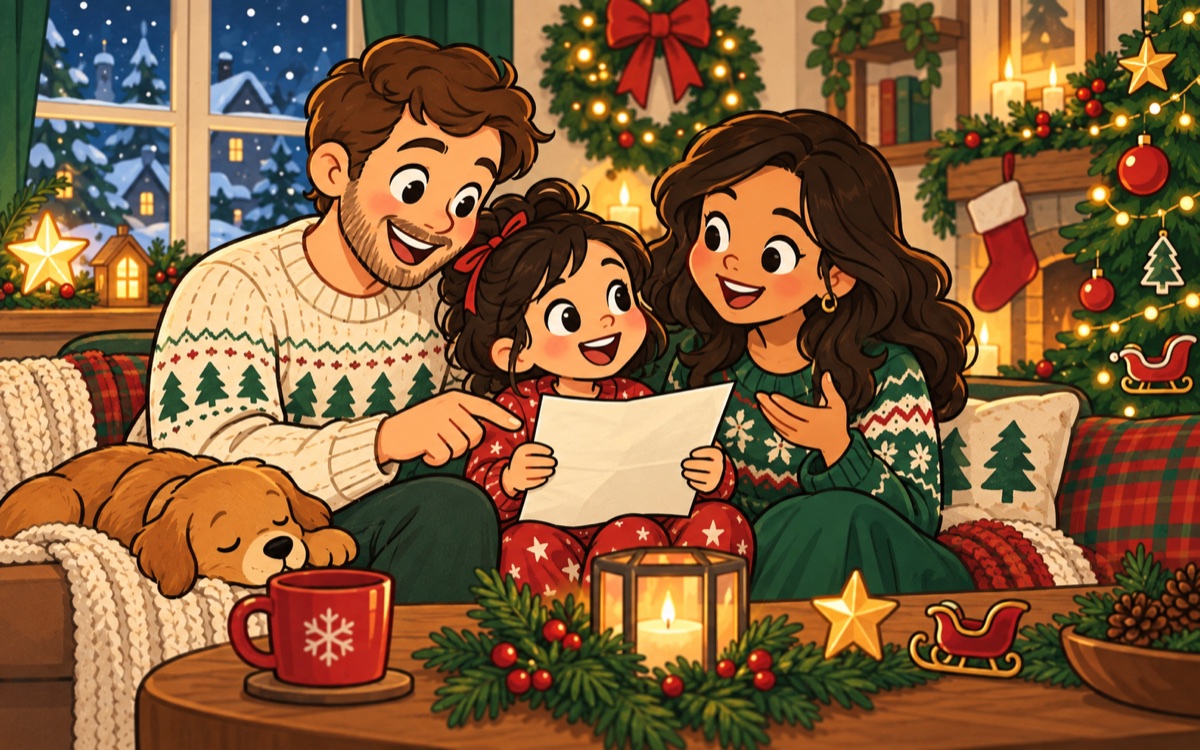 13
13Baby Jesus in English, Santa in Czech: a bilingual Christmas.
At home you call him Ježíšek, but Grandma reads to the children in English. Or Santa comes to your house and you’d like his letters in Czech. Choose the character and language separately, then add your family’s own words.
Read the article ↗Maps and family traditions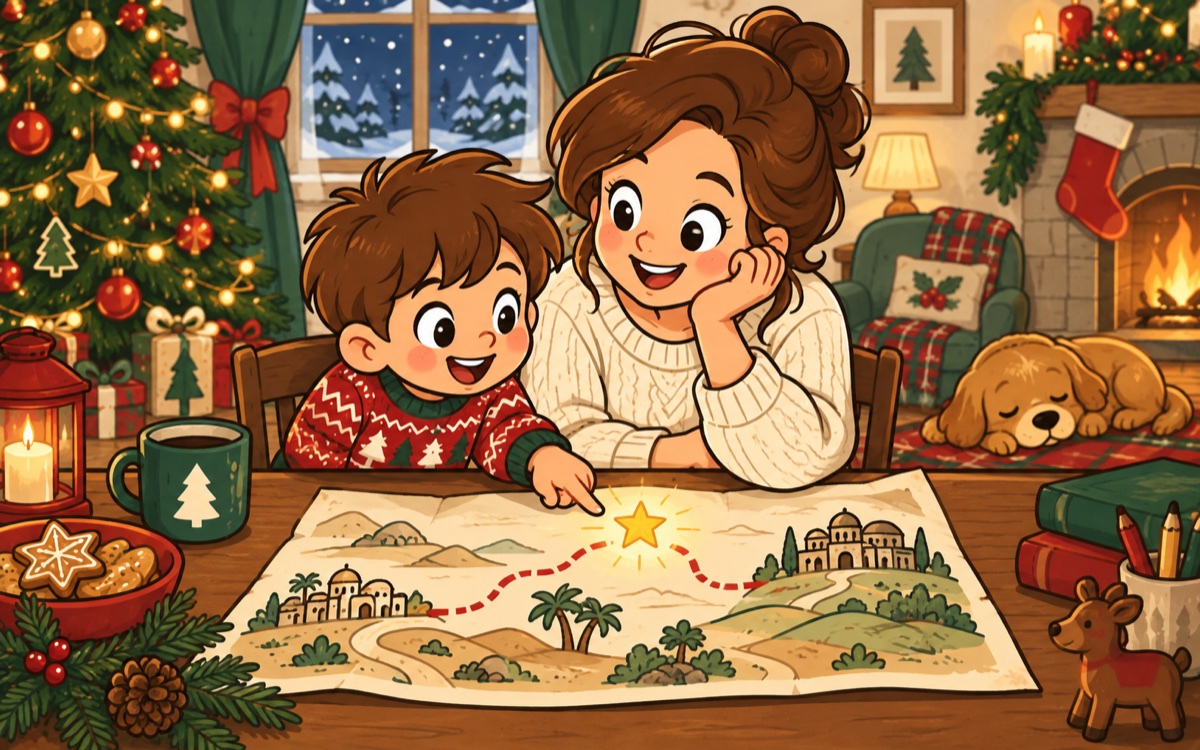 14
14What does Baby Jesus look like? A star can mark his journey.
In your child’s drawing, Baby Jesus has wings. In another family, everyone imagines him differently. A little star can show his route on the map and leave children’s pictures as they are.
Read the article ↗Maps and family traditions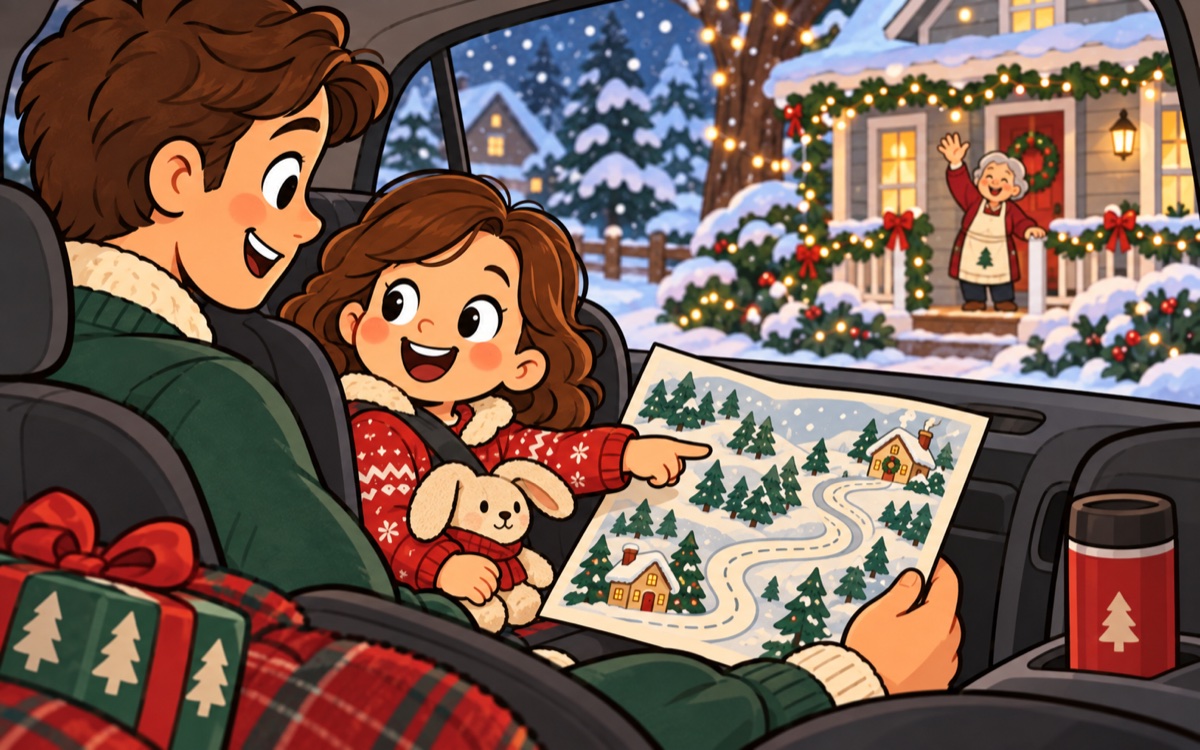 15
15“That’s the road to Grandma’s!” A map for curious children.
Some children spot a familiar river, town or road straight away. Pause at those places when you look at the map together. “Is he here yet?” might briefly become “Which way will he go next?”
Read the article ↗Messages and moments together
 04
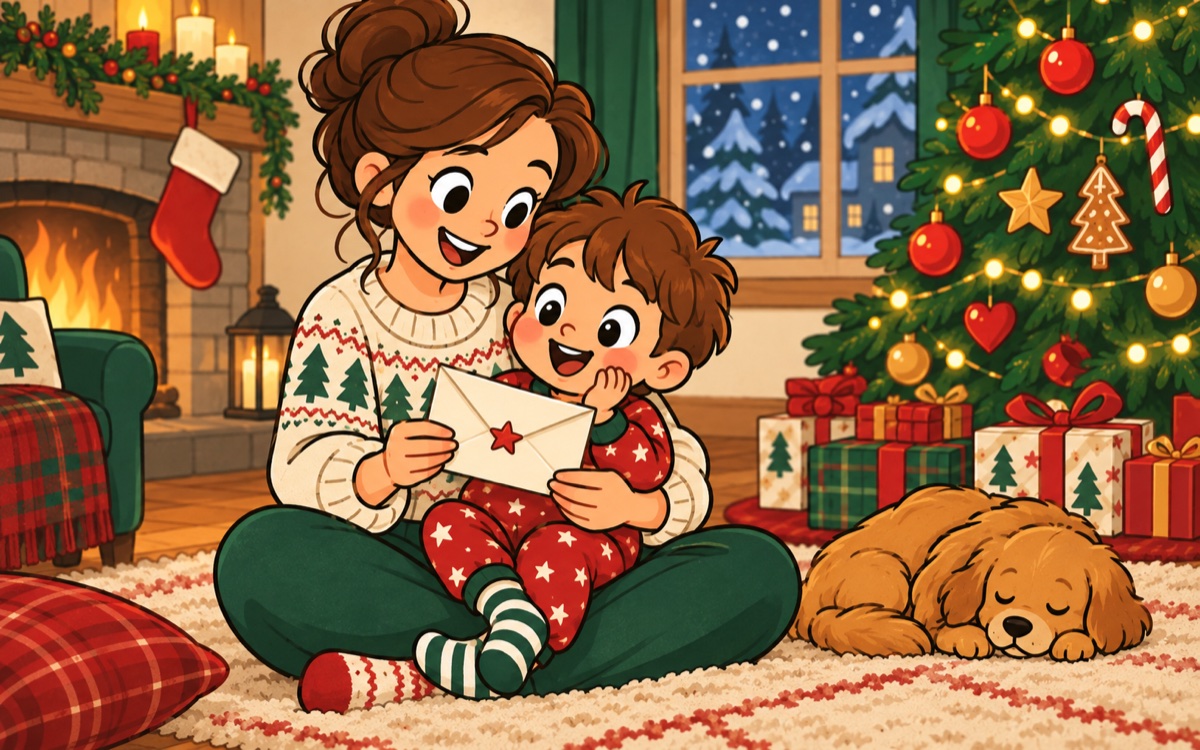
04Young children and a Christmas map: one letter can be enough.
Your child sits on your lap, points at the little star and wants to open the envelope. You read two sentences, then they’re off to play again. That can be your whole visit to the Christmas map.
Read the article ↗Messages and moments together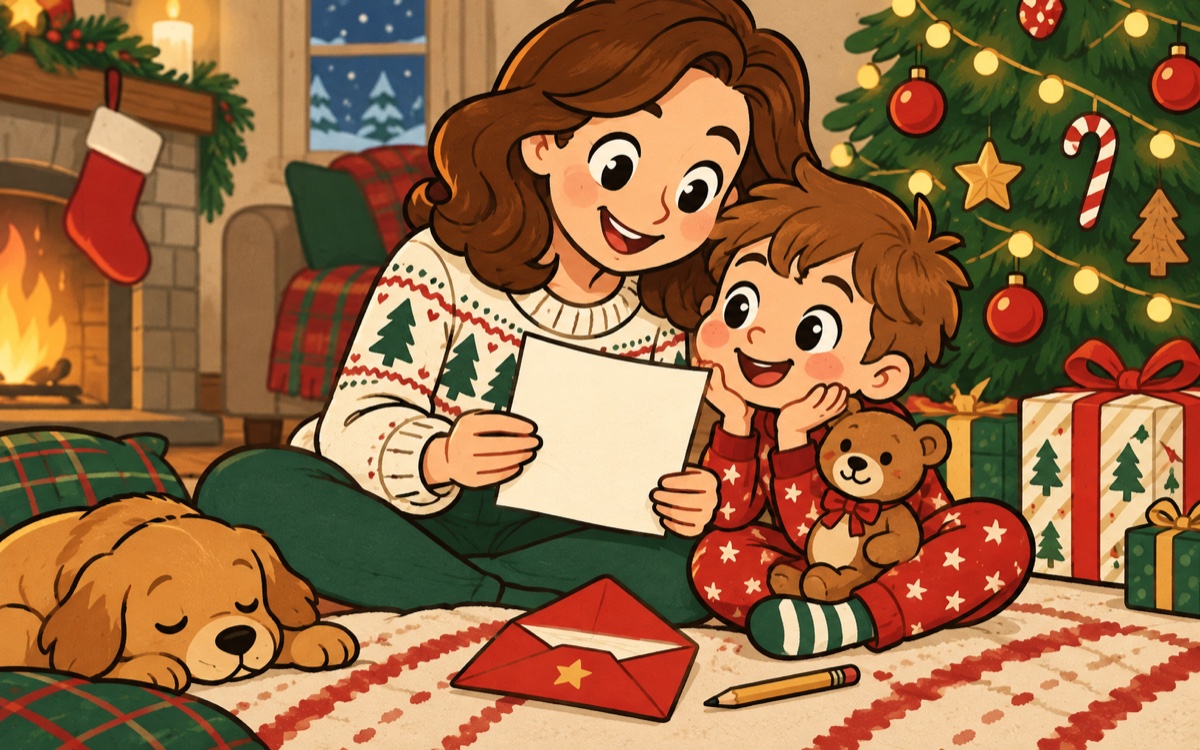 10
10How to write a Christmas message: a name and one familiar detail.
“Dear children” could be for anyone. “Alex, is there room for Teddy under your blanket?” sounds closer to home. One familiar detail can make a short Christmas letter feel personal.
Read the article ↗Messages and moments together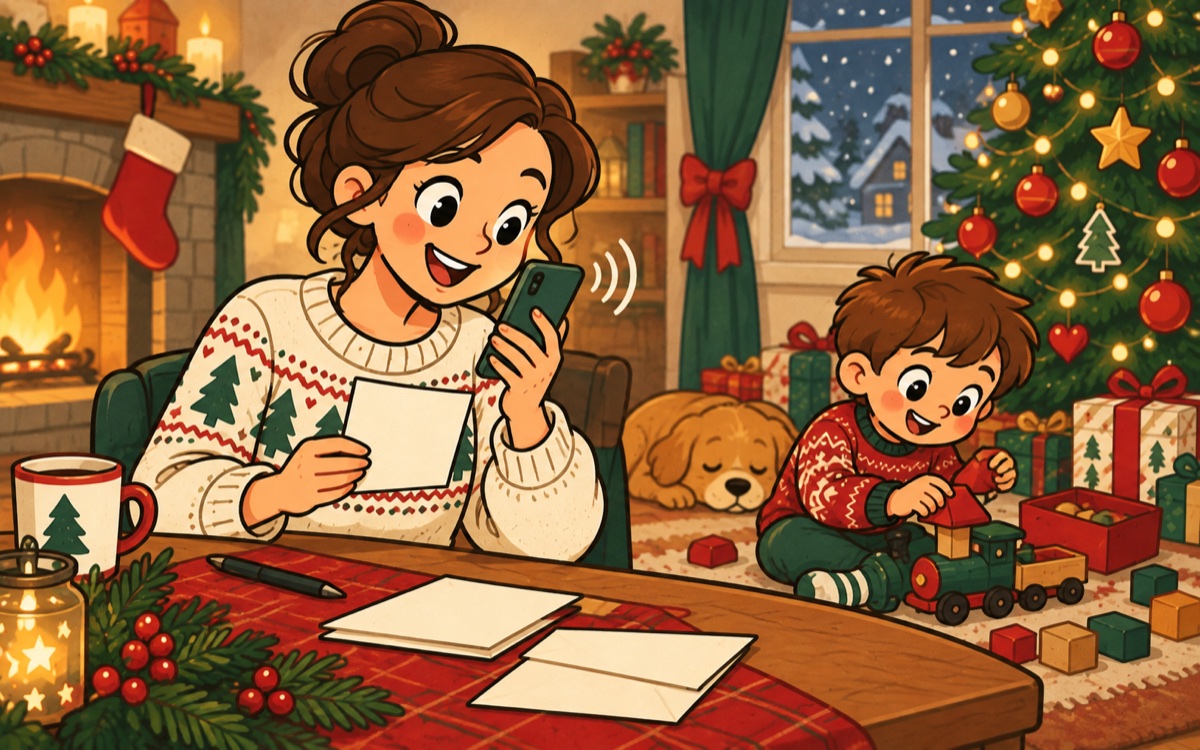 11
11A Santa voice message: read it aloud first.
A greeting, a little news from the road and a goodbye. That’s enough for a short Santa voice message. Generated audio is still being prepared; you can write the words and read them to your children now.
Read the article ↗Messages and moments together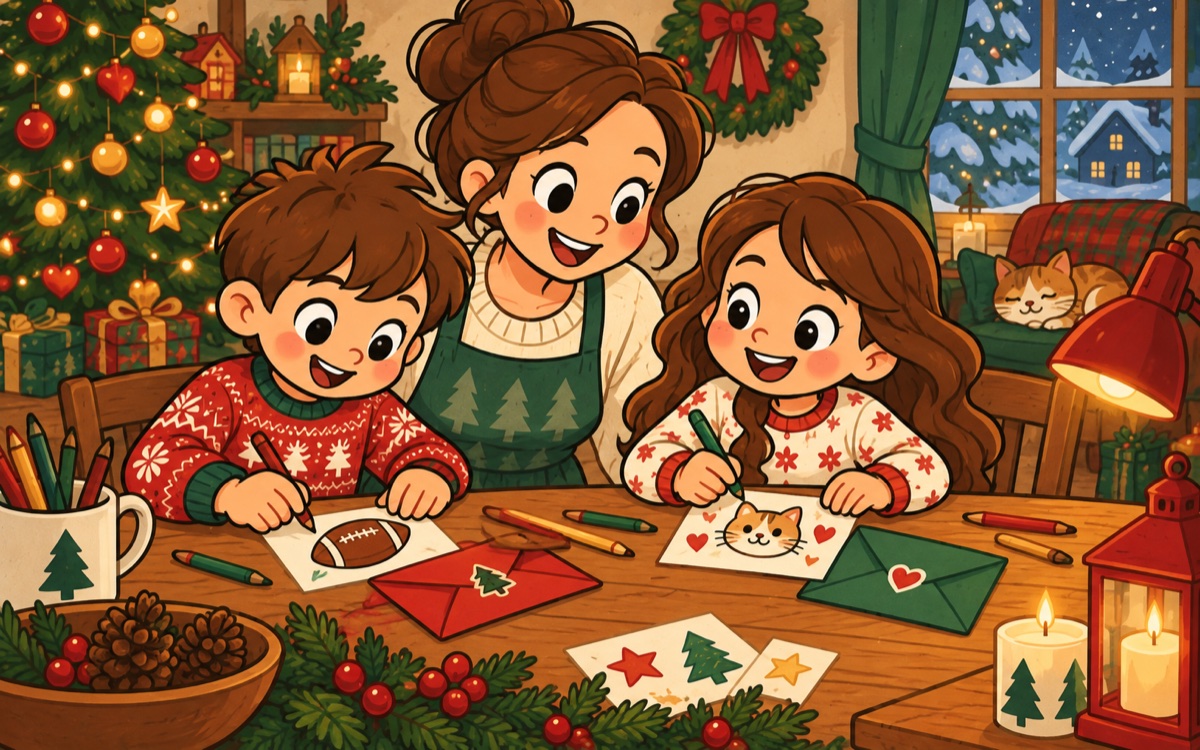 12
12Christmas messages for siblings: a detail for each child.
One child loves dinosaurs; the other has a whole family of soft toys in bed. A shared Christmas journey has room for both. Start with each child’s name and one familiar detail.
Read the article ↗Messages and moments together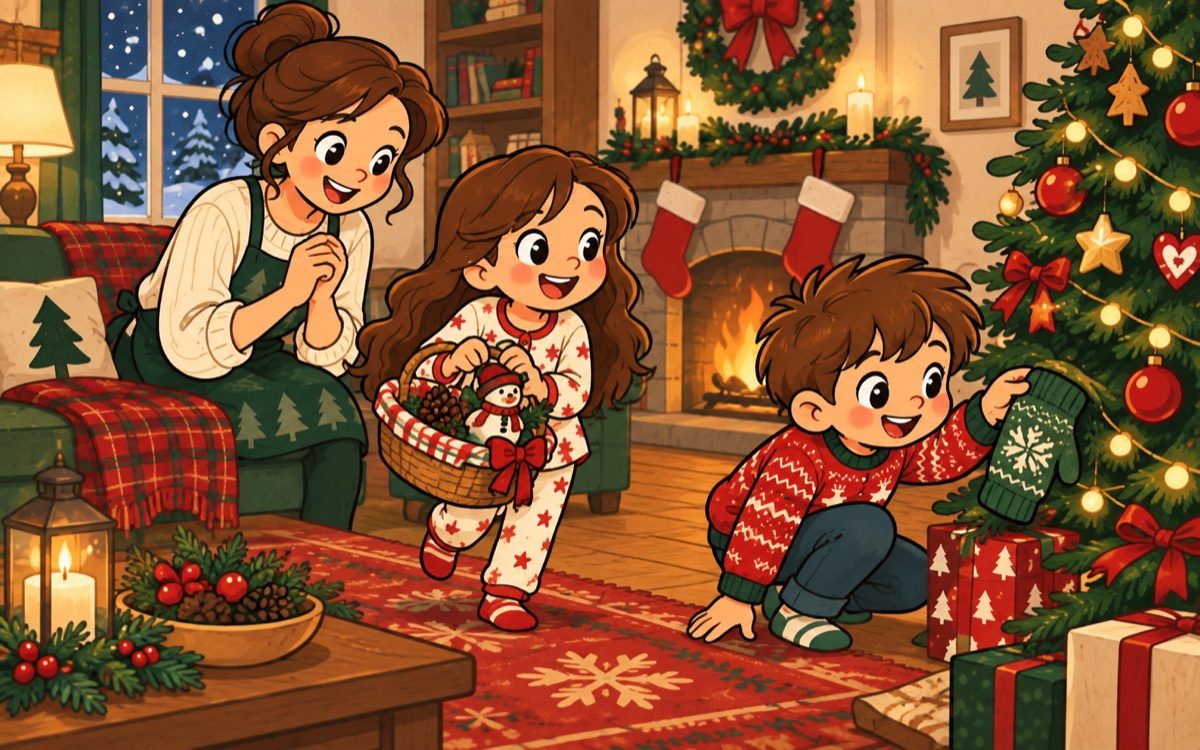 16
16Something green, something soft: a Christmas hunt at home.
Close the map for a moment and look around the room. What’s green? What’s soft? Is there a star anywhere? Three simple clues are enough for a little hunt between letters.
Read the article ↗Messages and moments together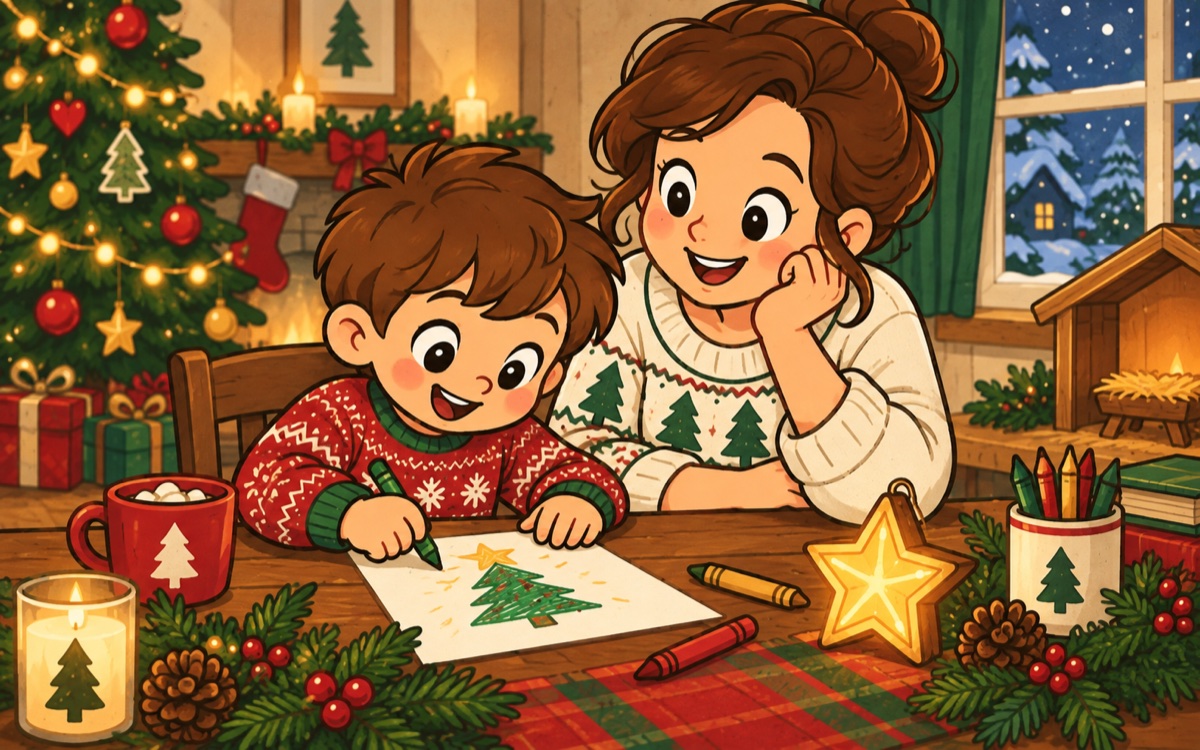 17
17A letter to Baby Jesus can be a single drawing.
There’s a big digger on the paper, a small Christmas tree and a few letters squeezed into the corner. The letter is finished. Children can draw, dictate or write in their own way while you help capture what they’re looking forward to.
Read the article ↗Messages and moments together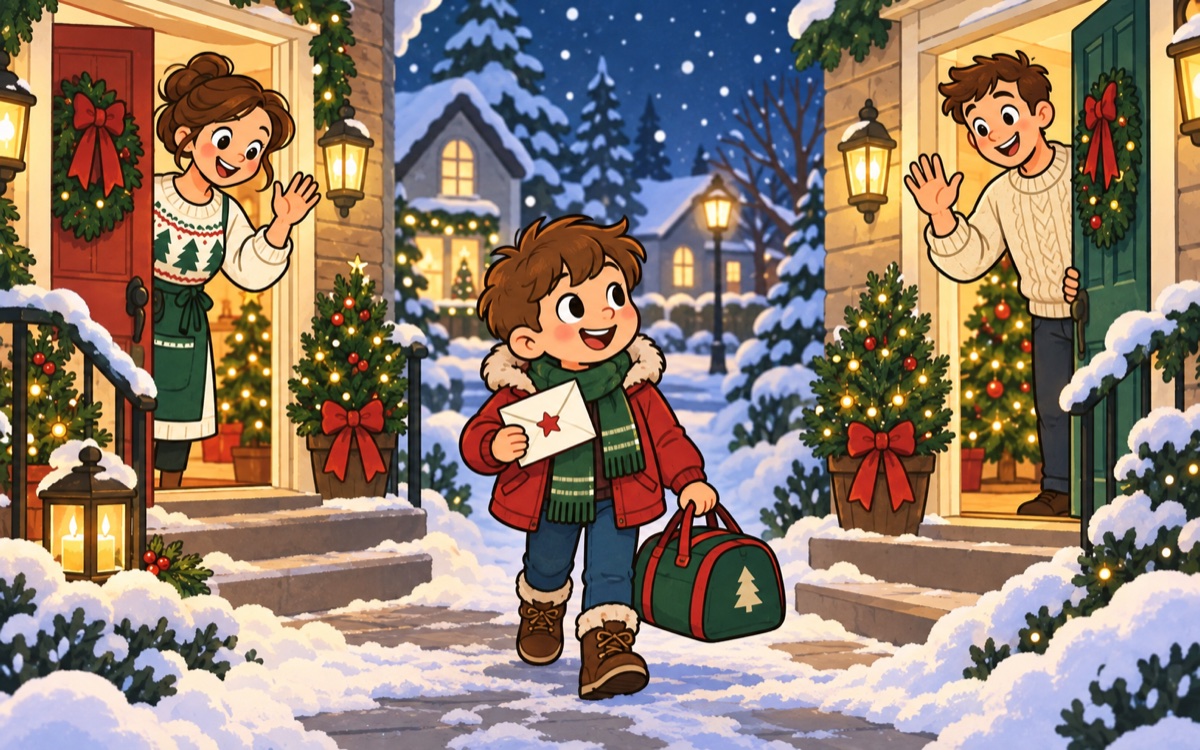 19
19“Grandma, open the letter!” One journey in two homes.
You read the first letter at breakfast at home, then another after lunch at Grandma’s. Her screen shows the same journey and messages. When you go home, she can keep following along.
Read the article ↗Real-life Christmas questions
 21
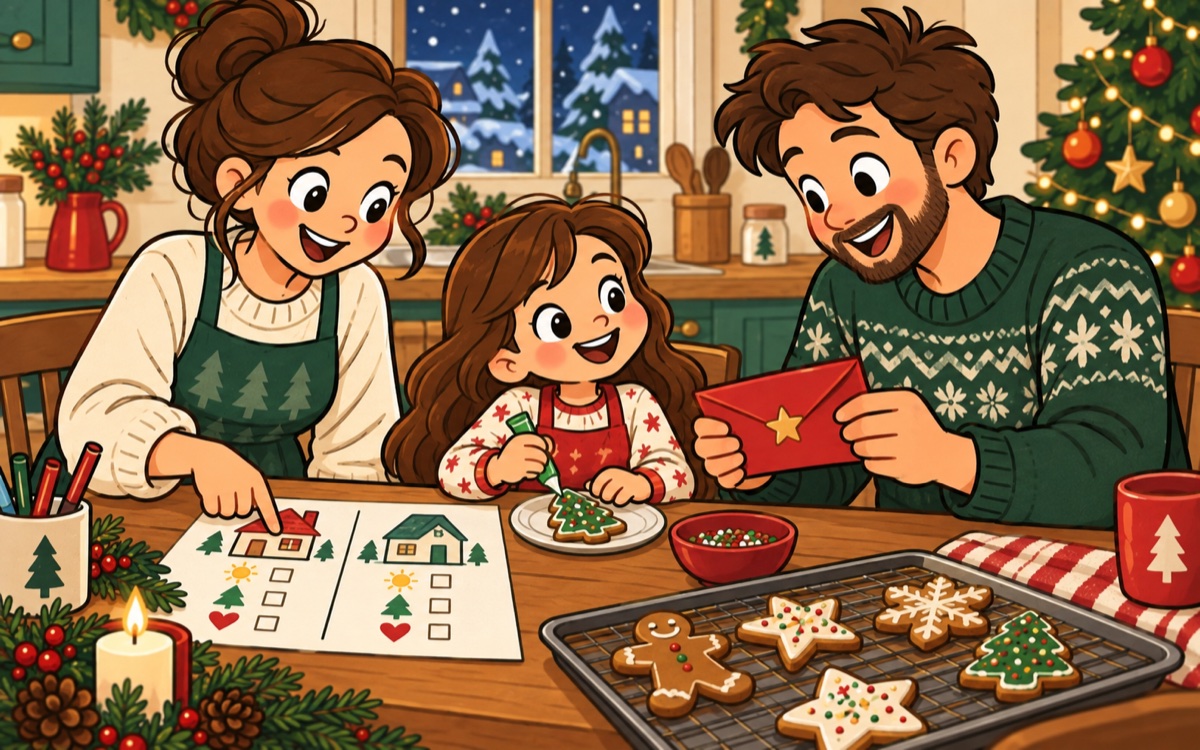
21Santa between two homes: a Canadian family Christmas plan
If your child is spending Christmas in two homes, tell them where they’ll wake up, when they’ll travel and what comes with them.
Read the article ↗Plan the day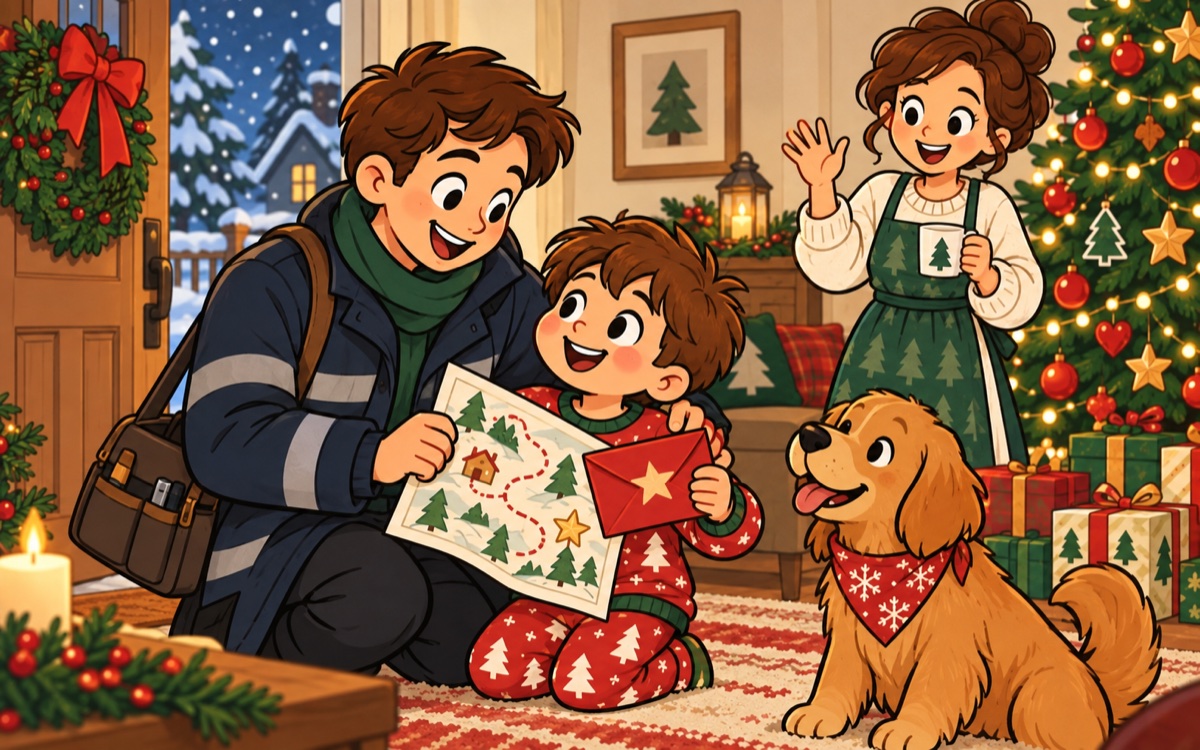 22
22When a parent works on Christmas Day
A shift may move your family celebration. Tell your child what will happen without tying it to an exact arrival time.
Read the article ↗Plan the day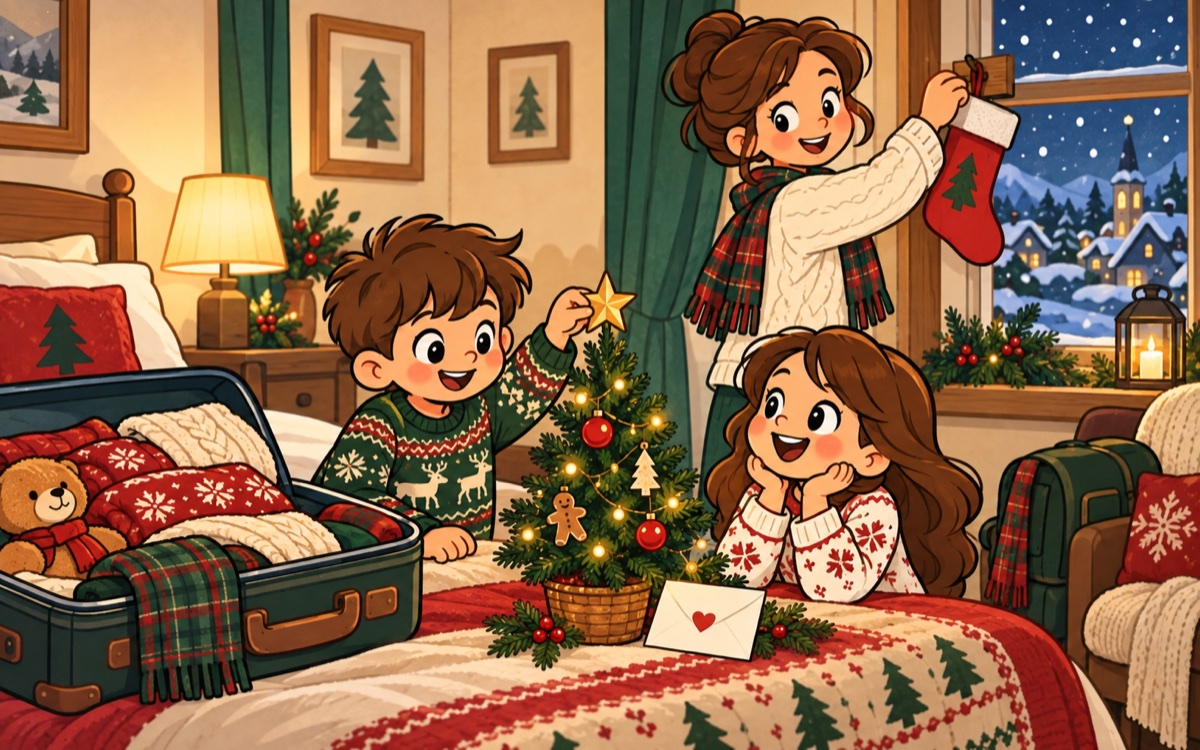 23
23Christmas away from home: Santa, luggage and winter travel
A visit to family is easier when you decide which gifts travel and which can wait at home.
Read the article ↗Messages and moments together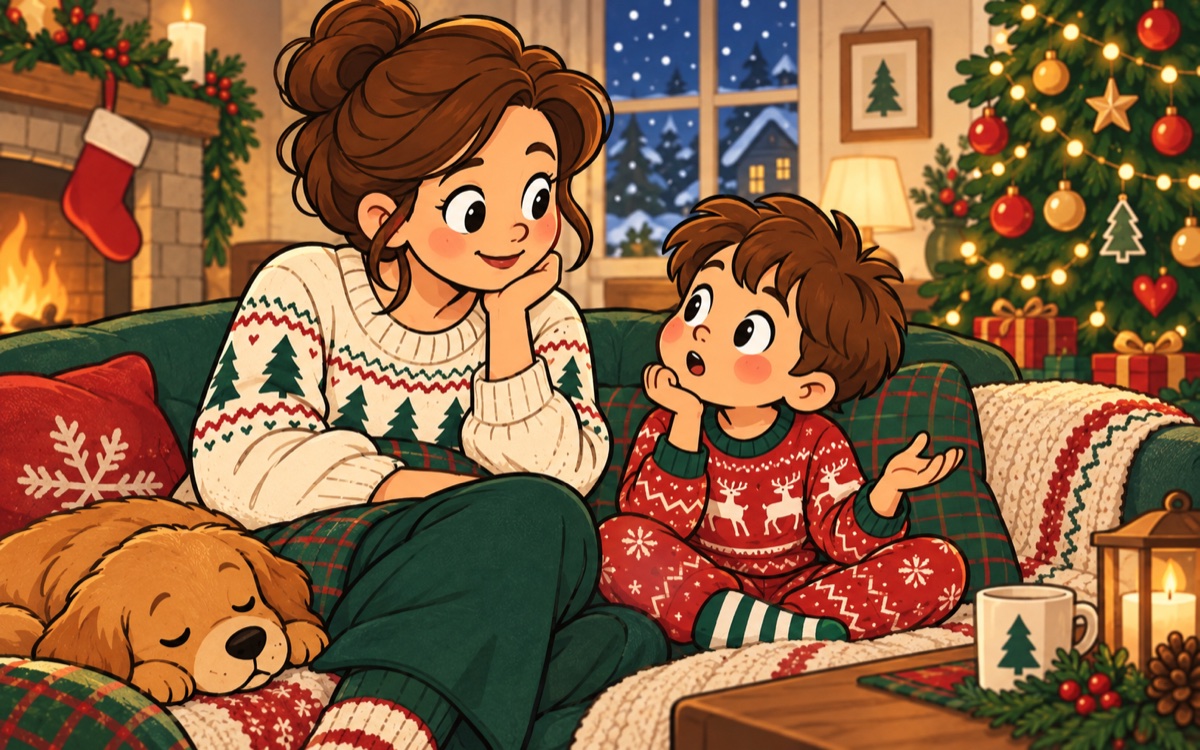 24
24When your child asks whether Santa is real
A question at school, in the car or after seeing a receipt may call for different answers. Listen before deciding how much to say.
Read the article ↗Messages and moments together 25
25When an older sibling has figured out the Santa story
Let your older child choose whether to help. Adults can handle the younger children’s questions.
Read the article ↗Plan the day 26
26Planning a calmer Christmas morning for a sensory-sensitive child
A simple plan can help when visitors, gifts and unfamiliar sounds all arrive at once.
Read the article ↗Plan the day 27
27Christmas Eve or Christmas morning? Making room for both
If your family has a Christmas Eve réveillon, you can still save stockings for the morning.
Read the article ↗Maps and family traditions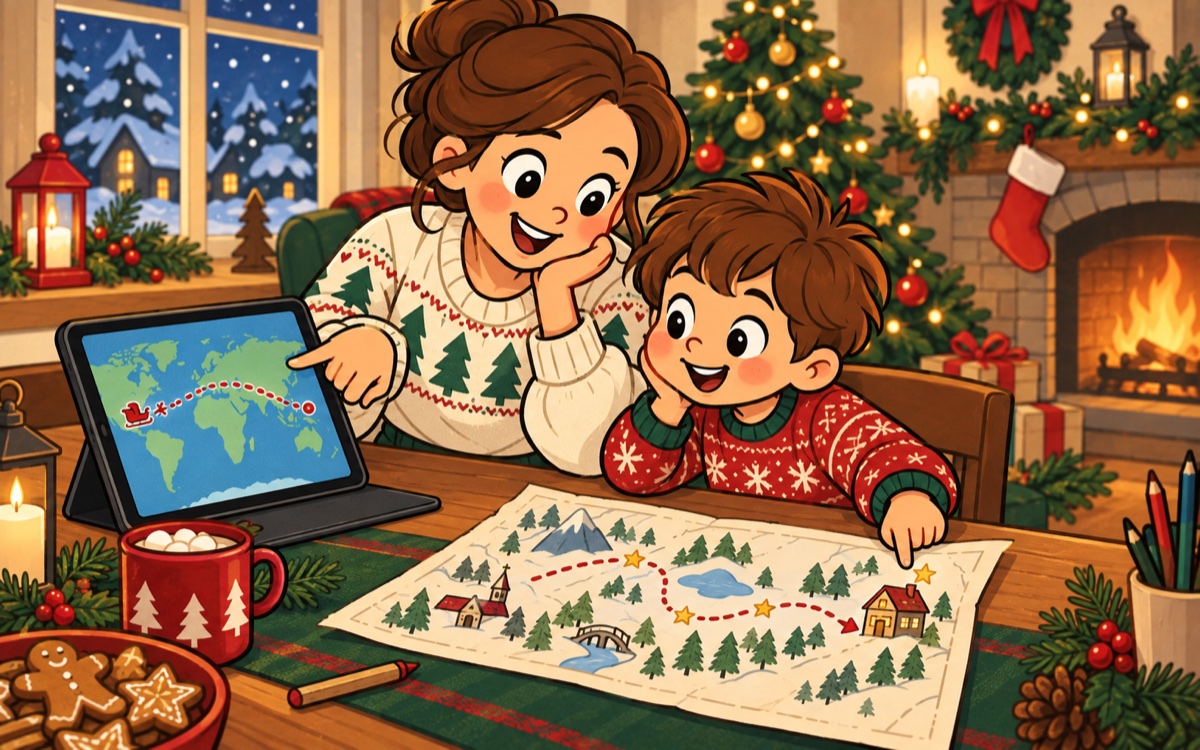 28
28NORAD, Google or your family’s own Santa story?
Enjoy the world map together, then decide the timing of your own celebration at home.
Read the article ↗Messages and moments together 29
29Write a Santa message without handing over your child’s information
One detail from family life is more meaningful than a form asking for a photo, school and exact address.
Read the article ↗Plan the day 30
30Waiting for Santa off-screen: three plans for different amounts of time
A short activity can make the wait before bed easier, whether you’re at home or visiting family.
Read the article ↗Messages and moments together 31
31When a child asks why Santa gave someone else more
A gift comparison can sting. Help your child feel heard without turning presents into a measure of worth.
Read the article ↗Plan the day 32
32A first Christmas together in a blended family
A new family arrangement can keep old rituals while trying one new thing together.
Read the article ↗Maps and family traditions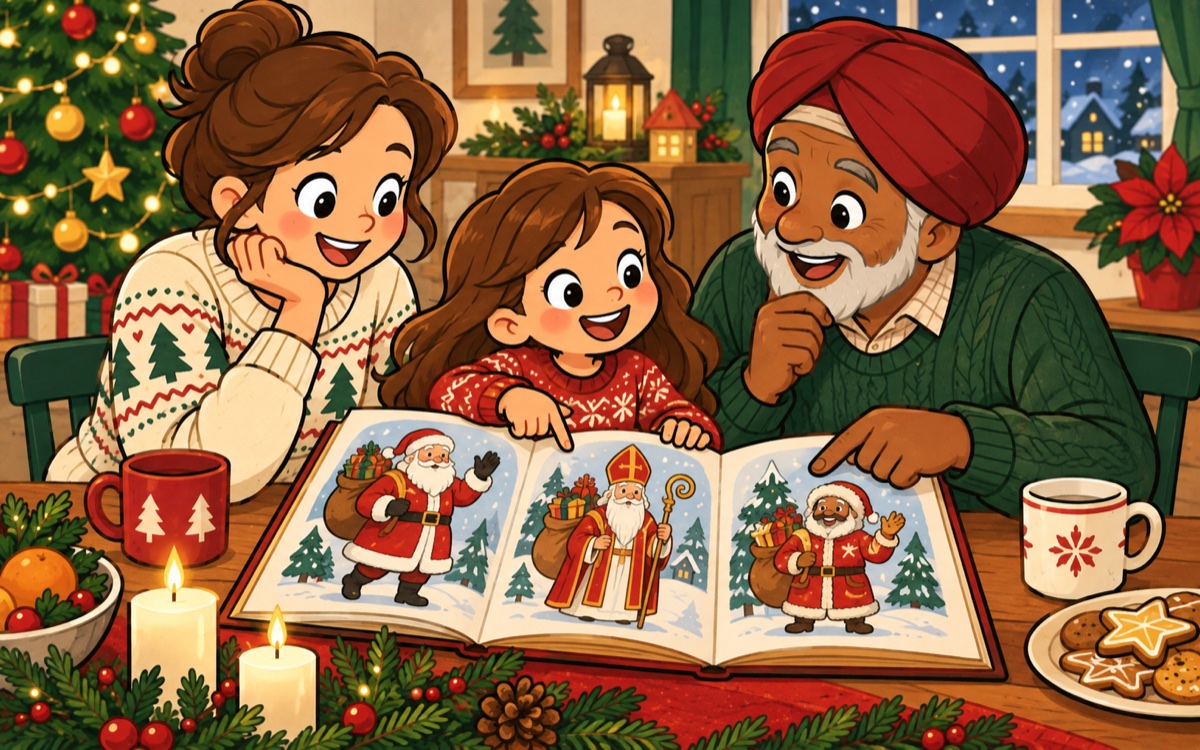 33
33Santa or le père Noël? Naming the Christmas visitor in Canada
English and French names can meet at school, on packaging and around the same family table.
Read the article ↗Plan the day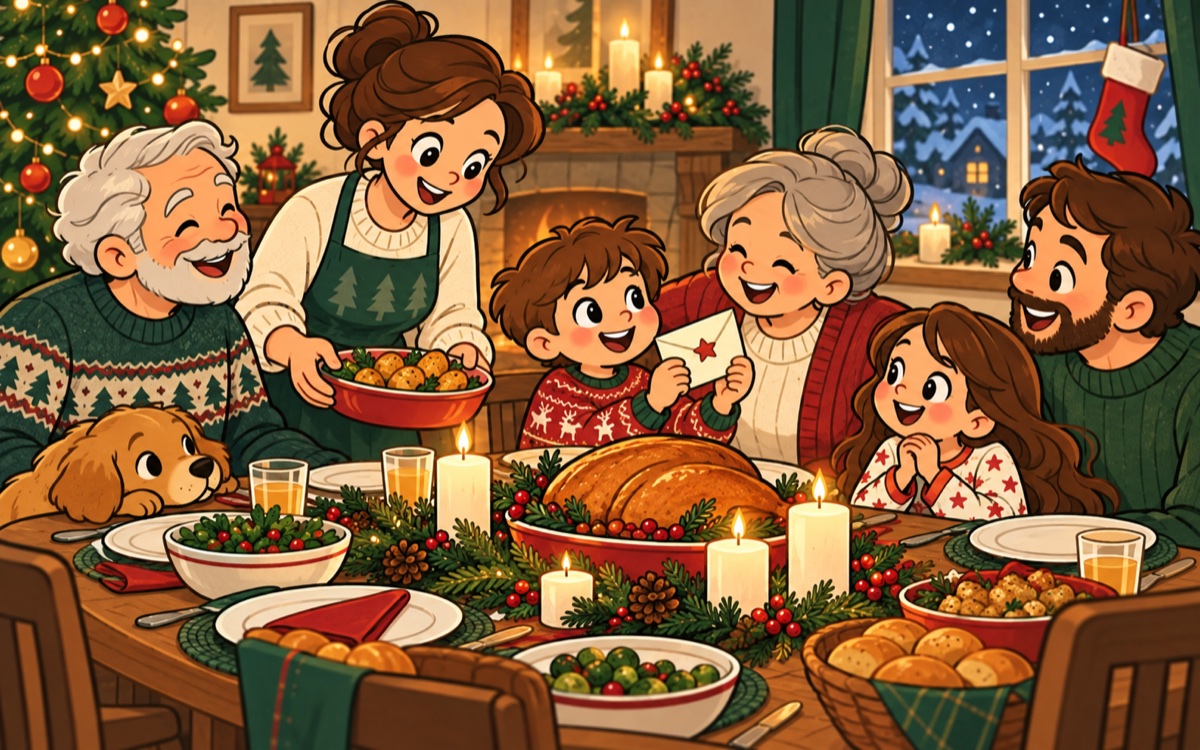 34
34Nochebuena and Santa in a Canadian household
A December 24 gathering and a December 25 stocking can fit together without asking children to guess which gifts come when.
Read the article ↗Messages and moments together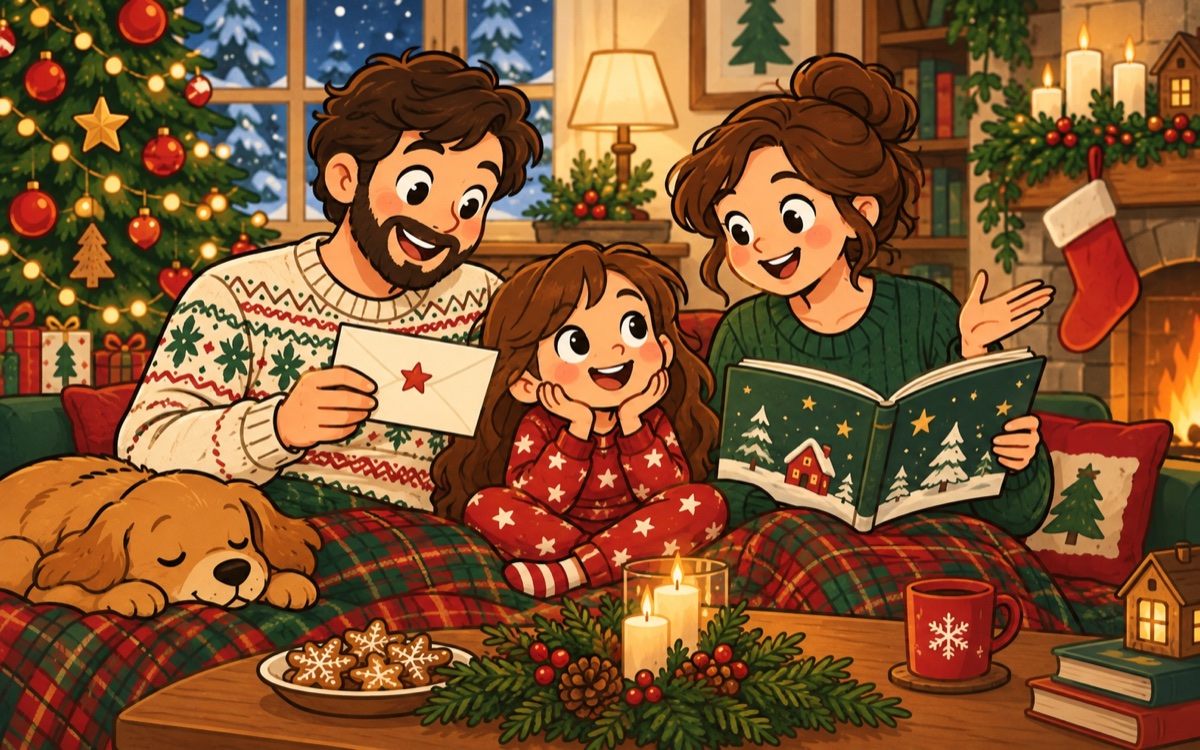 35
35Santa and le père Noël in a bilingual Canadian home
English and French can share a Christmas story when the message follows the family’s own words and schedule.
Read the article ↗Plan the day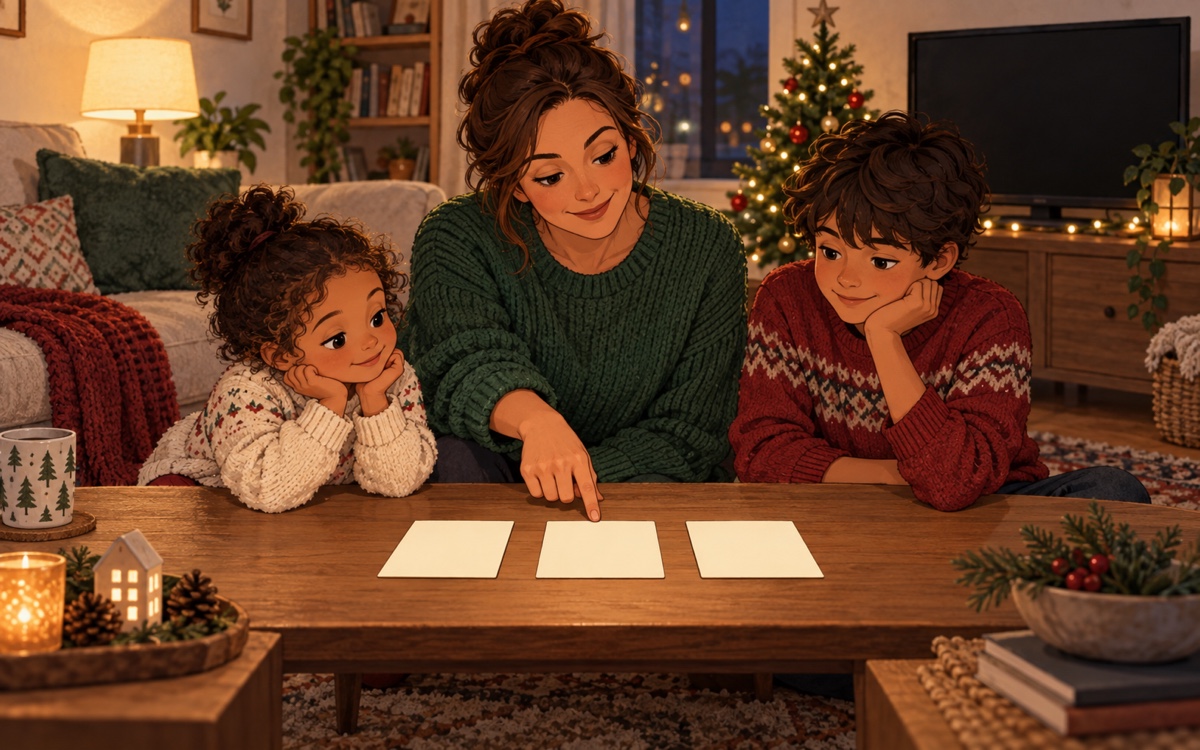 36
36Choose a Christmas movie that fits your family’s evening
Compare up to three Christmas movies by running time, content and the language or accessibility options your family needs. Use the choice sheet to see what fits tonight and what still needs checking.
Read the article ↗Plan the day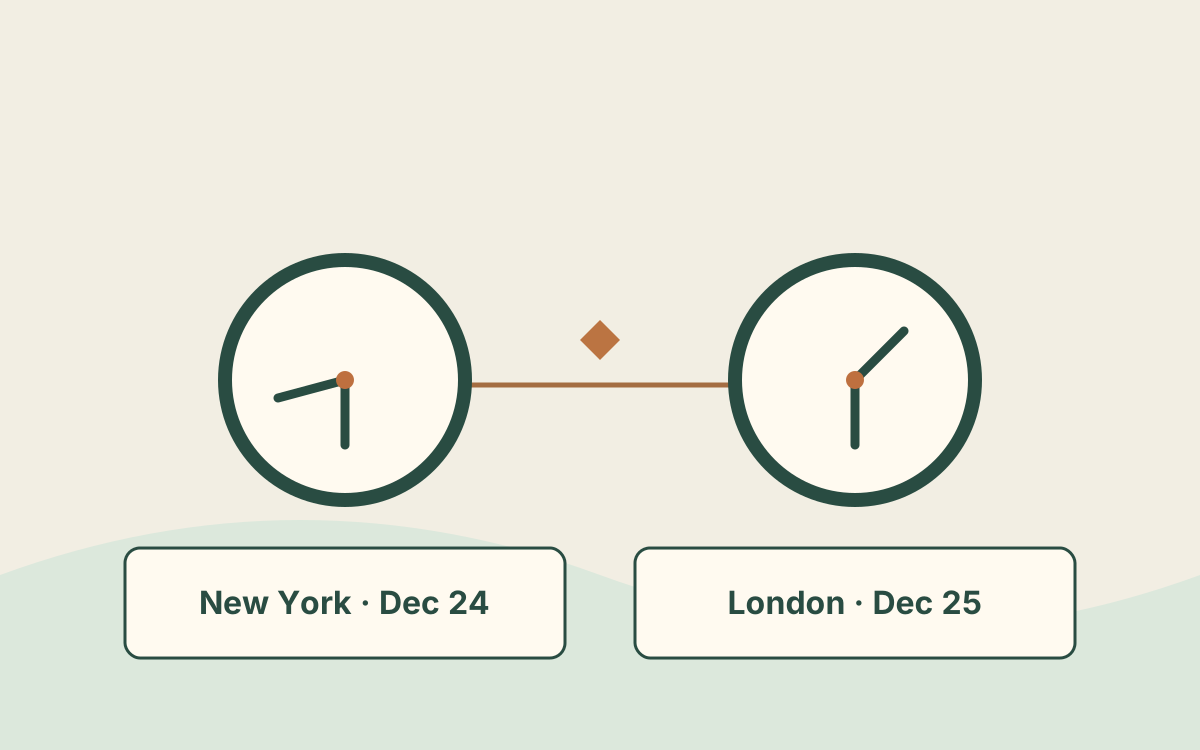 37
37Check both local Christmas dates before planning across time zones
Use a named city, a full date and a second adult check to coordinate a Christmas moment across places, with a printable date sheet.
Read the article ↗Plan the dayRestart a paused family Christmas plan with a change check
Put two dated notes side by side, distinguish confirmed choices from open ones, and recheck the place, local date and time before anyone acts.
Read the article ↗Plan the day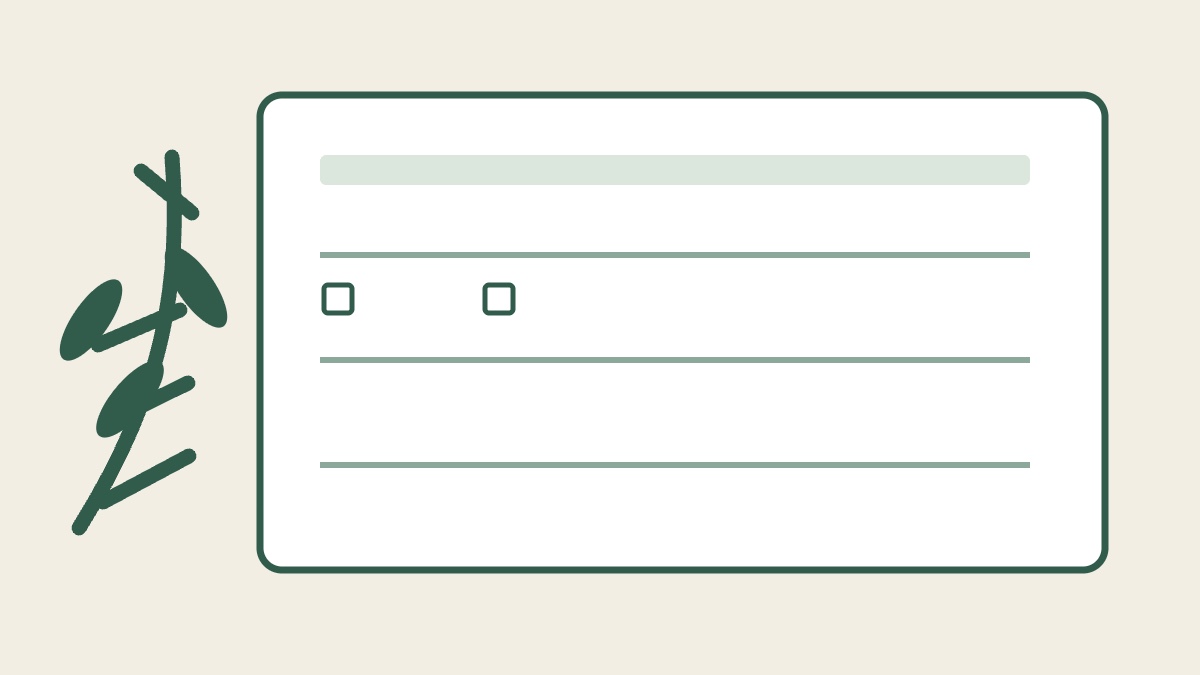 39
39Before telling your child: a Christmas decision card for two homes
Confirm the exact words of a proposed Christmas change between adults before telling a child. Print one private card per decision.
Read the article ↗Messages and moments together 40
40Keep the Christmas letters your family actually shared
Separate shared letters from drafts, preserve readable copies and decide what remains private in your family keepsake.
Read the article ↗Maps and family traditions 41
41Try the Christmas story preview before choosing what fits your family
Explore a fictional story and use a short card to decide which moments, if any, belong in your Christmas plans.
Read the article ↗Plan the day 42
42Plan your family’s Christmas story on one page
Gather optional Christmas story ideas on a printable page and check the place, local date, gift moment and story voice with an adult.
Read the article ↗See what your children will see.
Open the first letter, follow the star on the map and try holding the arrival. You don’t need an account for the preview.
The family app is not publicly available yet. We will announce its launch here.